I can give you a workout that makes you sweat, gets your heart rate up, and leaves you tired.
But what would that actually tell you?
Would it tell you that I understand your goals? That I know where you’re starting? That I have a plan to help you become stronger, move better, or accomplish something you haven’t been able to accomplish on your own?
That’s why I want people to understand the difference between working out and training. Because you can put a lot of effort into the gym without having a clear idea of where that effort is taking you.
A workout is an individual exercise session. Training is the planned process that connects those sessions to a specific goal.
Your workout is what you do today. Your training program explains why you’re doing it, how it connects to the work ahead, and how you’ll know whether you’re progressing.
A workout can absolutely be part of training. The difference is whether that session belongs to a bigger plan.
Maybe you go to the gym to clear your head, move your body, or enjoy an hour to yourself. There’s value in that. You don’t need a spreadsheet to justify being active.
But when you tell me you want a specific result, we need to get specific about how we’re going to pursue it.
“I want to get stronger.” Stronger at what? “I want to get in shape.” What would that allow you to do? “I want to feel better.” What are you struggling with now, and what would improvement look like in your daily life?
Those questions help us establish point A and point B.
Point A is where you are today: your experience, your current abilities, your limitations, your schedule, and what you can realistically commit to.
Point B is where you want to go. Maybe you want to build muscle. Maybe you want to finish a race. Maybe you want to get up from the floor more easily or have the strength and endurance to keep up with your kids.
Training is how we build the route between those two points.
That takes more thought than choosing a few exercises and deciding how many rounds you’re going to do.
We need movements that serve your goal. We need an appropriate starting point. We need a way to progress, time to recover, and a way to evaluate whether the plan is working.
Sometimes progress means more weight. Sometimes it means more repetitions with better control. Sometimes it means completing the same work with less difficulty. What we measure should reflect what you’re trying to accomplish.
And when something isn’t working, we adjust. A program has to account for the person following it.
This is also why training can feel repetitive. You may see the same exercises for several weeks because we’re giving you an opportunity to practice them, improve them, and measure your progress.
A new exercise every session might keep you entertained. But novelty, by itself, doesn’t tell us whether you’re getting closer to your goal. Neither does walking out exhausted.
I want you to work hard. I also want you to understand what that work is accomplishing.
Which brings me to something people sometimes ask:
“Can I come in for a free workout and try you out?”
I understand the question. You’re considering investing your time and money, and you want to know whether we’re a good fit.
But this is one of the biggest reasons I don’t offer a free workout as a demonstration of everything I do: I would be giving you exactly that—a workout.
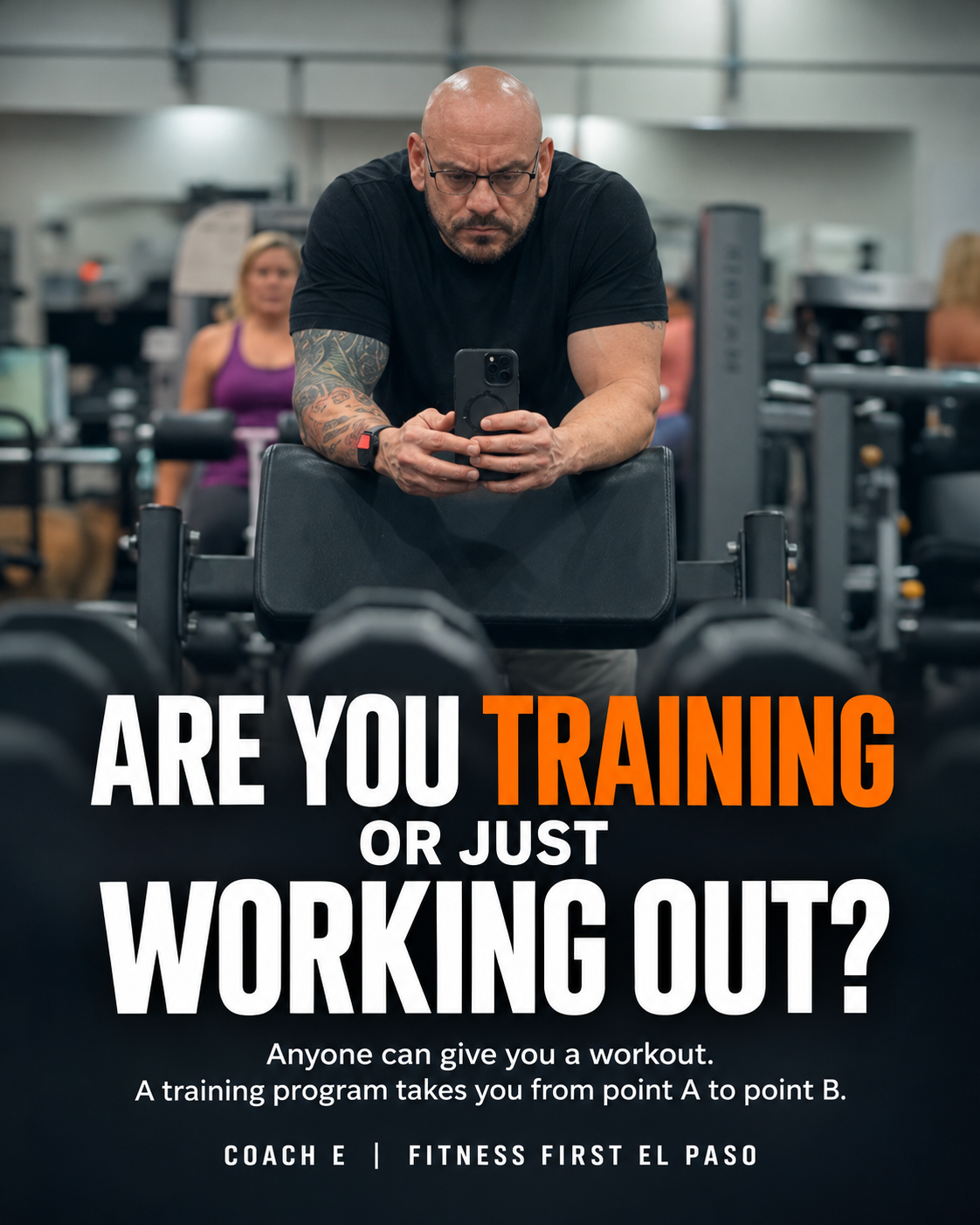
Anyone can give you a workout.
I could put a tough session together, push you through it, and have you leave thinking, “Damn, that was hard.”
But you came to me because you wanted to accomplish something. How tired you feel after one session tells you very little about whether I can help you get there.
One session can give you a feel for my coaching style, how I communicate, and how much attention I pay to your movement. Those things matter. But the full value of coaching becomes clearer over time: in the plan, the feedback, the adjustments, and the progress we can actually identify.
I want our first conversation to be about you. Where are you now? Where do you want to go? What have you tried? What keeps getting in the way?
That gives us something meaningful to build on.
So before your next session, ask yourself: Do I know what I’m working toward? Do I understand how today’s workout fits? Do I have a way to tell whether I’m improving?
If you can’t answer those questions, your effort deserves a clearer direction.
Showing up matters. Working hard matters. Having a plan gives that commitment somewhere to go.
Anyone can give you a workout. I want to help you get from point A to point B.